
New Jersey homeowners often spend hours meticulously wiping down counters, dusting shelves, and vacuuming floors to keep their homes pristine. But even if your living room looks spotless, the largest air filter in your home might be holding onto a dirty secret.
Wall-to-wall carpeting acts as a giant sponge for your home’s indoor air. Every time you open a window to let in a breeze, pet your dog, or simply walk across the room, particles settle into the carpet fibers. While this filtering effect keeps dust out of the air you breathe, the carpet eventually reaches its capacity. When it does, every footstep launches a microscopic cloud of pollutants back into your breathing zone. Indoor air quality is directly linked to carpet cleanliness, and standard household cleaning routines often fall short of addressing the root problem.
What’s Really Living in Your Carpet Fibers? (Dust Mites & Pollen)
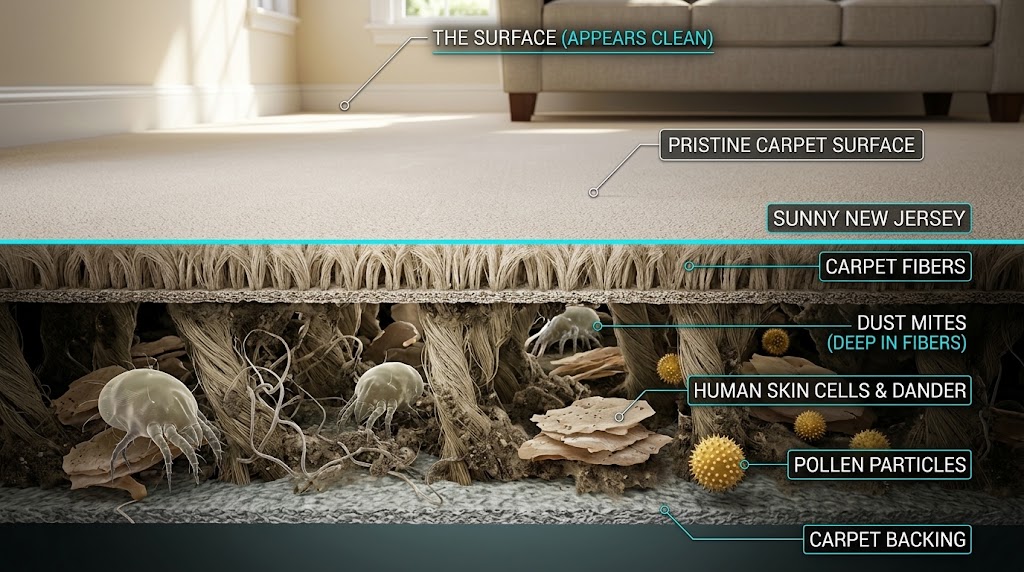
To understand why surface cleaning isn't enough, you have to look at what is actually trapped beneath the surface of a seemingly clean floor. Carpets are expertly engineered to hide dirt. By the time a carpet looks noticeably dirty to the naked eye, it can already hold up to a pound of soil per square foot.
The most common health hazards hiding in your carpet include:
-
Dust Mites and Feces: These microscopic arthropods thrive in warm, indoor environments and feed on the millions of skin cells humans shed daily. It isn't the mites themselves that cause allergic reactions, but rather their waste products, which are easily inhaled.
-
Pollen and Outdoor Allergens: Throughout the New Jersey spring and fall seasons, pollen is tracked indoors on shoes and clothing, eventually settling deep into the carpet pile where it remains trapped long after the season ends.
-
Pet Dander and Biological Contaminants: Microscopic flecks of skin shed by cats, dogs, and other pets burrow down to the backing of the carpet, creating a continuous source of irritation for allergy sufferers.
-
Volatile Organic Compounds (VOCs): Pollutants from household cleaning chemicals, paint, and even cooking smoke settle into the fibers over time.
Vacuuming vs. Hot Water Extraction: The Big Difference
Most homeowners rely on their vacuum to keep their carpets fresh. However, even the most expensive consumer vacuums are only designed to manage surface debris. They effectively remove loose crumbs, pet hair, and top-level dust, but they lack the mechanical power to extract the deeply embedded particulate matter near the carpet backing.
Relying solely on vacuuming is like trying to wash your clothes by only brushing them off. Over time, the heavy, abrasive soil left behind by vacuums grinds against the synthetic fibers of your carpet like sandpaper. This friction causes the fibers to fray and permanently dulls the appearance of the rug.
The Problem with DIY Carpet Cleaning
When vacuuming isn't enough, many homeowners turn to rental carpet cleaners or store-bought shampooers. These DIY machines typically cause more harm than good for a few distinct reasons:
-
Inadequate Suction: Rental machines leave too much water behind, driving moisture down into the carpet pad. This creates the perfect dark, damp breeding ground for mold and mildew.
-
High pH and Sticky Residues: Store-bought detergents are often highly alkaline and difficult to rinse out completely. This sticky residue acts like a magnet for new dirt, causing your carpets to look heavily soiled just weeks after a DIY clean.
-
Lack of Heat: Dust mites and resilient biological contaminants require water temperatures exceeding 130°F (54°C) to neutralize effectively. Consumer machines simply cannot generate or maintain this level of heat.
The Hot Water Extraction Solution
To properly remove carpet allergens and restore the health of your home, you need commercial-grade technology. Pure Carpet Care utilizes truck-mounted hot water extraction—the gold standard recommended by the Institute of Inspection, Cleaning and Restoration Certification (IICRC).
Our process injects highly pressurized, pH-balanced, heated water deep into the carpet pile to agitate and break down stubborn soils. Simultaneously, a high-powered industrial vacuum extracts the water, pulling up the dead dust mites, pollen, dander, and abrasive dirt with it. Because we neutralize the cleaning agents during the rinse phase, your carpets are left soft, thoroughly sanitized, and completely residue-free.
How Often Should You Deep Clean for a Healthy Home?
Regular deep cleaning isn't just about aesthetics; it physically extends the life and plushness of the carpet by removing the abrasive soils that destroy fibers. For the average New Jersey household, the IICRC recommends professional hot water extraction every 12 to 18 months. This baseline maintenance schedule prevents the carpet from reaching its maximum filtering capacity and keeps indoor air quality high.
Special Considerations for Pet Owners and Allergy Sufferers
If your home has unique environmental factors, you will need a more aggressive maintenance schedule:
-
Homes with Pets: Furry friends track in significantly more outdoor dirt and introduce biological contaminants like dander, urine, and feces. Homes with one or more pets should schedule a deep clean carpets service every 6 to 9 months. Enzymatic treatments can also be applied to neutralize odor-causing bacteria at the molecular level.
-
Asthma and Allergy Sufferers: If a family member suffers from severe indoor allergies or asthma, carpet cleaning should be performed every 3 to 6 months to minimize the airborne dust mite waste and pollen that trigger respiratory distress.
-
High-Traffic Households: Large families with heavy foot traffic require more frequent extraction to prevent premature wear patterns in hallways and living rooms.
Breathe easier tonight. Schedule your professional hot water extraction carpet cleaning with Pure Carpet Care today!