
When you walk into your living room, kick off your shoes, and step onto plush carpeting, you expect comfort and cleanliness. If the surface looks vacuumed and spotless, it is easy to assume the floor is clean.
In reality, your carpet acts as the largest, most absorbent air filter inside your home.
Every day, gravity pulls airborne particles out of your indoor air and deposits them straight into the carpet pile: outdoor pollen tracked in from the New Jersey humidity, pet dander, microscopic dust mites, and fine particulate dirt. While your carpet does an admirable job trapping these pollutants so you do not breathe them in immediately, an unwashed filter eventually becomes saturated. When that happens, everyday foot traffic kicks those trapped contaminants back into your breathing zone.
Here is an honest look at what really hides beneath the surface of your flooring, why traditional vacuuming cannot resolve it alone, and how targeted restoration protects your home’s indoor air quality.
What’s Really Living in Your Carpet Fibers?
Even in a meticulously kept home, the base of a carpet pile hosts an entire microscopic ecosystem. Standard vacuuming removes surface debris, but it lacks the suction and heat needed to address the three primary biological hazards embedded deep near the carpet backing:
-
Dust Mites and Their Waste: Dust mites thrive in soft textiles where humidity and food sources are plentiful. They feed primarily on the millions of dead skin flakes humans and pets shed daily. The microscopic waste particles they leave behind contain protein enzymes that are among the leading triggers of nighttime sneezing, itchy eyes, and unexplained indoor allergy flare-ups.
-
Pollen and Outdoor Particulates: Across Central New Jersey, changing seasons bring heavy tree, grass, and weed pollen counts. These microscopic particles cling to shoes, clothing, and pet paws, settling straight to the bottom of carpet fibers where a standard dry brush roll cannot dislodge them.
-
Trapped Oils and Bio-Pollutants: Cooking vapors, outdoor exhaust oils, and pet oils form a microscopic film over carpet fibers. This oily film acts like a magnet, binding dry soil and fine grit to the fiber strands. Over time, that bond prevents conventional vacuums from lifting the dirt out.
Vacuuming vs. Hot Water Extraction: The Critical Difference
Homeowners frequently ask: "If I vacuum twice a week with a HEPA vacuum, isn't that enough?"
Routine vacuuming is vital for regular maintenance, but vacuuming is strictly a dry-soil removal method. It operates on airflow and rotating bristles designed to capture loose dirt resting on the upper 20% to 30% of the fiber.
What Vacuuming Leaves Behind
A household vacuum cannot break down oil bonds, dissolve dried biological matter, or extract soil that has migrated down to the primary backing. Furthermore, consumer rental units from hardware stores often introduce a worse problem: they dump gallons of soapy water into the carpet without the vacuum lift required to pull it back out. The leftover water soaks the padding, leading to extended dry times, musty odors, and a sticky soap residue that actively attracts new dirt twice as fast.
Why Professional Hot Water Extraction Works
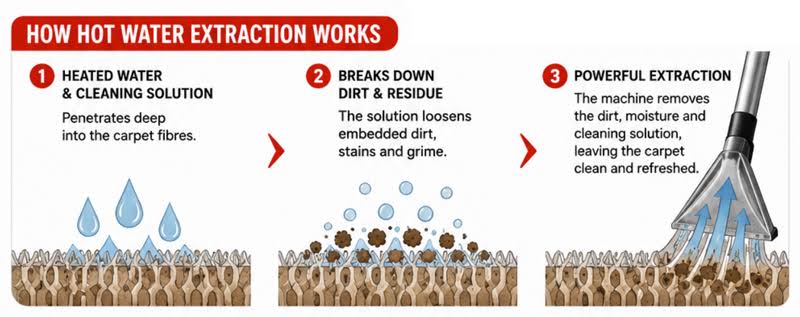
True restoration requires industrial-grade hot water extraction (frequently referred to as professional steam cleaning).
-
200°F+ Water Temperatures: High heat emulsifies oils, sanitizes the fibers, and neutralizes dust mite allergens on contact without relying on harsh, abrasive chemicals.
-
Balanced Pre-Treatments: Specialized conditioning sprays suspend embedded particulate matter and break the chemical grip between dirt and fabric.
-
Commercial Vacuum Lift: Truck-mounted extraction machinery generates powerful vacuum suction, flushing out suspended contaminants and recovering up to 95% of the moisture immediately. The result is deep sanitization, zero detergent residue, and fast drying times.
How Trapped Dirt Destroys Carpet Lifespan
Indoor air quality is the primary health concern, but neglected carpets also hit your wallet directly.
Fine soil particles are composed of silica, quartz, and grit. Under a microscope, these tiny particles feature jagged, razor-sharp edges. Every time family members or guests walk across a carpet loaded with settled grit, those sharp particles grind against the carpet yarns like sandpaper.
This abrasive friction cuts into the protective outer layer of synthetic fibers (such as nylon and polyester), causing fiber abrasion and crushing. Once carpet fibers are permanently scratched, they lose their ability to reflect light, resulting in those dull, gray "traffic paths" that no amount of surface cleaning can undo. Deep extraction removes this abrasive soil before it can permanently destroy the carpet pile.
Recommended Cleaning Frequency for New Jersey Homes
To keep indoor air fresh and protect flooring warranties, professional cleaning schedules should reflect the actual traffic and biological load inside the home:
-
Standard Households: Every 12 to 18 months to flush out ambient dust and maintain fiber elasticity.
-
Homes with Pets: Every 6 to 9 months to break down pet dander, eliminate dried saliva/urine salts, and control dander accumulation.
-
Allergy and Asthma Sufferers: Every 6 months, ideally scheduled right after peak spring and fall pollen seasons to reset indoor air quality.
Restore Your Home’s Air Quality with Pure Carpet Care
A truly clean carpet is not just about what you can see on the surface—it is about what you are no longer breathing in.
At Pure Carpet Care, we utilize professional-grade, truck-mounted hot water extraction systems engineered to flush deep-set allergens, grit, and residues out of your home completely. Our residue-free rinsing process leaves your floors soft, sanitized, and safe for bare feet, children, and pets.
Ready to refresh your home and breathe easier?
Visit purecarpetcare.com to schedule your professional cleaning online, or call our team today for an upfront, transparent quote on your home’s carpets, area rugs, and upholstery.